What to Expect from In-Home Pet Euthanasia in the United Kingdom
Making the decision to say goodbye to a beloved pet through in-home pet euthanasia is one of the most difficult choices a family can face….

Deciding on dog euthanasia is never straightforward. Each dog and situation is unique, and determining the right time for this decision varies from case to case. However, there are general guidelines that can help you make an informed choice that is best for your pet.
In this blog post, we’ll explore the factors to consider when deciding on dog euthanasia. We’ll also offer tips for handling the process emotionally and ensuring that your dog’s final moments are as peaceful and gentle as possible.
First, let’s start by understanding what euthanasia involves.
As a pet owner, you might be familiar with the term “euthanasia,” but its meaning and implications may not be entirely clear.
Euthanasia, which translates to “a good death,” is the gentle and peaceful act of ending the life of a pet suffering from illness or old age, either at a veterinary clinic or at home. The process typically involves administering a sedative followed by an injection of a solution that ensures a painless and calm passing.
The ideal timing for dog euthanasia depends on various factors, including your dog’s health and overall quality of life. Here are some key considerations to help guide your decision:
Assess whether your dog is experiencing pain or discomfort. If your dog is suffering, euthanasia may offer them relief and end their suffering.
Consider if your dog is maintaining normal eating, drinking, and toileting habits. If they are unable to eat or drink without assistance, or if these functions have significantly declined, euthanasia might be a compassionate choice.
Evaluate whether your dog is still engaging in activities they enjoy and interacting positively with family. If they have lost interest in life and activities they once loved, it might be time to consider euthanasia.
Determine if your dog is responsive to commands and interaction. If your dog shows signs of severe sensory impairment or is not responding as they once did, and if this causes them distress, euthanasia might be the right decision.
Assess your dog’s mobility. If they struggle to get up or move around comfortably, this may indicate a declining quality of life, potentially making euthanasia a humane option.
If you find that your dog answers “no” to several of these questions, it may be worth considering euthanasia to improve their quality of life. It is a challenging decision, but ensuring your pet’s comfort and peace is paramount.
Consulting with a veterinarian can provide valuable guidance and help you make the best decision for your beloved pet.

Preparing for euthanasia is an emotional process, and there are several steps you can take to ensure your dog’s final days are as peaceful and comforting as possible. Here are some tips:
Cherish the time you have left by offering your dog extra attention and affection. Talk to them, take them for gentle walks if they’re up for it, and shower them with love and cuddles.
Create a cozy and comfortable environment for your dog. Provide a warm, soft place for them to rest, and keep their food and water easily accessible. Treat them to their favorite foods or special treats to brighten their days.
Involve all family members in saying goodbye. This allows everyone to share their final moments and create meaningful memories with your dog.
Capture these special moments by taking photos or videos. Creating a photo album or a video montage can be a heartfelt way to remember your dog’s life and the joy they brought to your family.
Deciding to euthanize your dog is a deeply personal and challenging decision. By taking these steps, you can ensure that their final days are filled with love, comfort, and cherished memories.
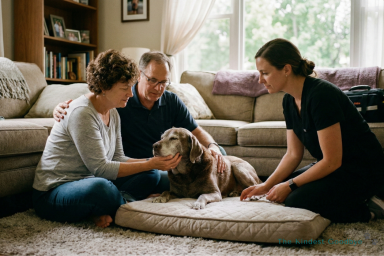
The euthanasia procedure itself is quite straightforward and typically takes place in a vet clinic, however home euthanasia is a kinder option for both you and your dog. Here are some of the typical steps:
Your pet is put in an environment that is calming for them and allows the vet to administer sedation if desired. Choosing to put them to sleep at home can help ensure the environment is as stress-free for them as possible.
A sedative is administered that renders your pet unconscious. This is followed by an injection of the euthanasia drug that will stop their heart and end your pet’s suffering. This happens quickly and painlessly for the dog.
After your pet’s passing, when you’re ready to move ahead, there’s the option of getting your pet cremated to honour their memory. For many families, cremation offers a gentle and meaningful way to say goodbye while creating the possibility of keeping your beloved companion close, even after death. Pet cremation has grown increasingly popular because of its flexibility, simplicity, and the emotional comfort it provides to grieving pet parents. It also avoids the practical limitations of burial, especially in urban areas where home interment may not be legally allowed or physically possible.
Cremation allows you to receive your pet’s ashes in a beautiful urn, keepsake, or pendant, providing a tangible reminder of the love you shared. You can keep the urn at home, place it on a memorial shelf, or even incorporate the ashes into a piece of custom jewelry. For those who prefer to scatter the ashes in a meaningful location, this symbolic act can bring profound emotional closure. Some families choose to divide the ashes among loved ones, so each member can hold on to a part of the pet’s memory. This level of personalization is what makes cremation such a powerful choice for remembrance.
You may also consider planting a tree or flower bed with the ashes mixed into the soil, creating a living tribute to your dog that will continue to grow and bloom in their memory. For many people, this ritual helps transform grief into healing. Others prefer storing the ashes in a discreet urn that blends into home decor, allowing the memory to remain a quiet part of daily life.
If you want to understand the full process of pet cremation and explore all the options available to you, this detailed guide from Tharp Funeral Home offers everything you need to know. It explains the types of cremation, how remains are handled, and how you can make arrangements with care and confidence.
Ultimately, choosing cremation is about honouring your dog in a respectful, heartfelt way. It gives you time and space to grieve, and a keepsake to hold onto for years to come. Whether you want to keep their ashes at home, spread them in a cherished place, or turn them into art or jewelry, cremation gives you the ability to create a personal, lasting tribute that matches the deep love you shared.
Choosing euthanasia is a challenging decision, but it can often be the most compassionate choice for your beloved dog. It provides an opportunity for your pet to pass away peacefully and with dignity. To ensure you make the best decision, it’s crucial to be fully informed about the process and its implications.
At The Kindest Goodbye, we offer in-home dog euthanasia services to help pet owners through this difficult time. We understand that the decision of when to put a dog down can be a difficult one, which is why we are here to help pet owners make the best decision for their dog’s wellbeing. Contact us or visit our website today to learn more.

Making the decision to say goodbye to a beloved pet through in-home pet euthanasia is one of the most difficult choices a family can face….
In this article, discover 10 powerful signs your dog is suffering this summer and how to recognise them. Summer is a special time in the…
Holistic veterinary care in the UK is gaining momentum as more families seek natural, integrative ways to improve the wellbeing of their pets. Across the…
If you would like to learn more or need advice, we offer free phone consultations with our caring team or one of the vets in our network to discuss your pet's situation.
If you would like to organise a peaceful farewell for your beloved pet at home, you can make a booking request and we will get back to you ASAP to confirm availability.
Pricing information can be found here.

The Kindest Goodbye now offers clients one month of free grief counselling and support through Griefity when you book with us. We also partner with Trees for Pets to offer discounted memorial tree planting to honour your pet's memory