Why It Is Important to Feed Your Dog Before Going to the Vet
Why it is important to feed your dog before going to the vet is a question many pet owners overlook until the moment they are…
Every dog lover has thought about it at least once: what if they could stay a little longer?
That wish, whispered through tears or quiet gratitude, may no longer belong to the realm of fantasy. Science is beginning to ask the same question and, for the first time, offer a serious answer.
Around the world, researchers are exploring a new area of veterinary science that focuses on extending the healthy years of our pets’ lives. It is called longevity medicine, and it aims to do something extraordinary: help animals age more slowly, live more comfortably, and stay healthy for longer.
Australia, a nation of devoted pet owners, is watching this global movement with great interest. From university research labs to innovative veterinary clinics, experts are beginning to talk about what was once unthinkable, slowing down the biological clock for dogs.
Every pet owner knows the bittersweet reality of life with a dog. They bring joy, comfort, and loyalty like no other, yet their lives seem to pass in fast-forward.
Smaller breeds often live well into their teens, while larger dogs, such as Great Danes or Bernese Mountain Dogs, rarely see their tenth birthday. The difference is not only genetic but also biological.
Veterinary research has shown that larger breeds age faster due to a combination of metabolic rate, cellular stress, and growth-related hormones. One of the main factors linked to this difference is a natural protein in the body that regulates growth and metabolism. Dogs with higher levels of this protein tend to grow quickly but also develop age-related conditions earlier in life.
In simple terms, large dogs live fast. Their size and growth rate, while impressive, appear to come at the cost of longevity. Scientists now believe that if they can safely adjust how these biological processes function, they may be able to help bigger dogs live longer, healthier lives.
The study of aging, known as geroscience, is one of the most rapidly advancing areas of modern biology. Researchers in both human and veterinary medicine are exploring how to reduce the effects of aging by addressing its underlying causes rather than just treating diseases as they appear.
Instead of waiting for conditions like arthritis, cancer, or diabetes to emerge, longevity medicine seeks to prevent or delay them by improving the body’s natural balance. The goal is not immortality. It is quality of life.
Scientists are learning that aging is not one single process but a combination of changes that happen over time. These include oxidative stress, inflammation, DNA damage, and the gradual decline of cell repair mechanisms. When these systems slow down, the body becomes more vulnerable to illness and loss of function.
By understanding and managing these mechanisms, researchers hope to develop safe, targeted ways to extend what they call healthspan, the number of years lived in good health —> not just lifespan.
Australians adore their pets. With more than 70 percent of households owning at least one, our country has one of the highest rates of pet ownership in the world. We treat them not just as companions but as members of the family.
As a result, veterinary care in Australia has become increasingly advanced and holistic. Pet owners now seek out therapies that go beyond traditional medicine, such as physiotherapy, hydrotherapy, acupuncture, and nutritional programs designed to support aging animals.
The idea of extending pets’ healthy years fits naturally into this growing trend of integrative care. Rather than focusing only on illness, many vets are beginning to focus on prevention, wellness, and emotional comfort, values that perfectly align with the mission of compassionate care providers across the country.
As the science develops, longevity medicine could one day become part of standard veterinary practice, helping pets age gracefully and comfortably under the watchful care of professionals who understand both biology and empathy.
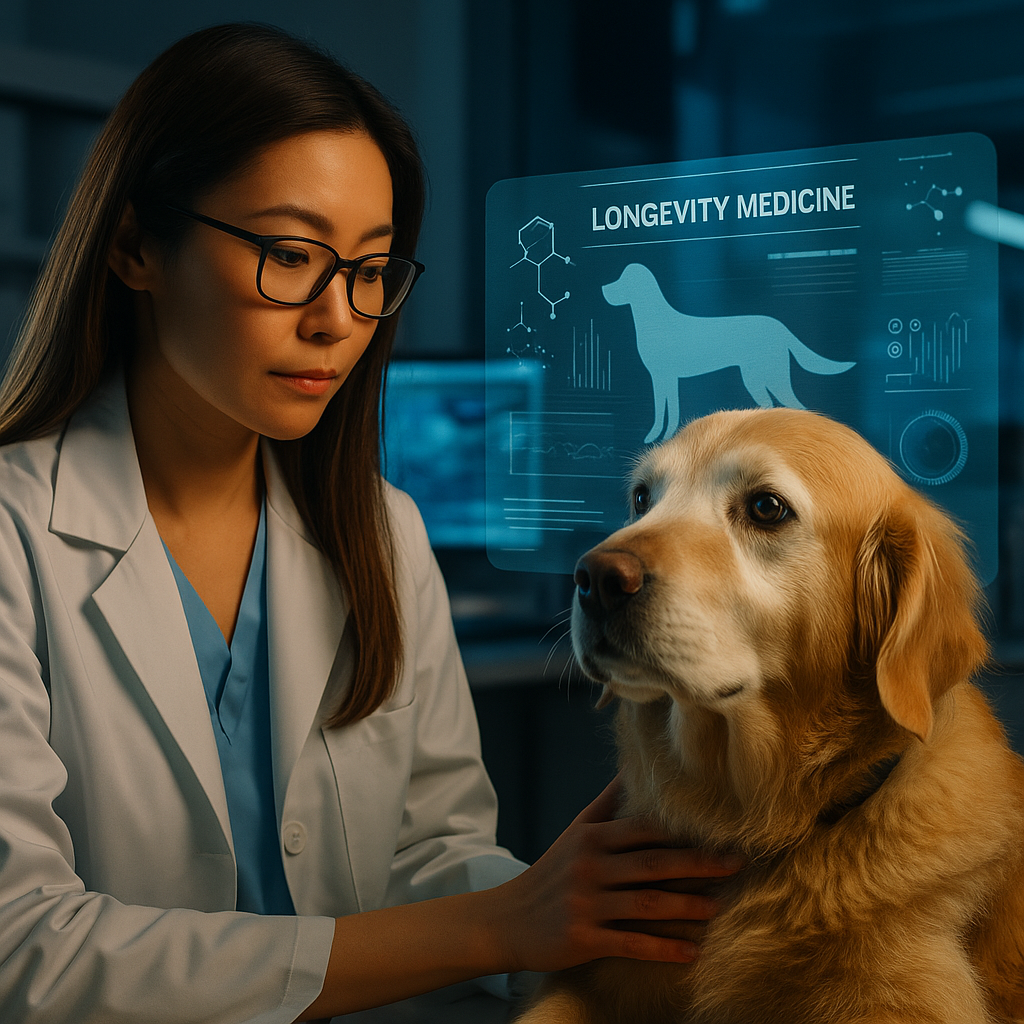
Traditional veterinary care has always been excellent at addressing specific problems: infections, injuries, and chronic diseases. But longevity medicine asks a deeper question —> what if we could reduce the risk of those problems in the first place?
This shift in thinking mirrors changes already happening in human medicine. Just as doctors are learning to prevent diseases like heart failure or diabetes through lifestyle, nutrition, and early intervention, veterinarians are beginning to look at how to prevent age-related decline in pets.
It is not about adding years at all costs. It is about ensuring the years they already have are lived well.
Dr. Sarah Linton, a holistic veterinarian based in Brisbane, explains it beautifully:
“We often think of aging as something we cannot influence, but that is changing. With new research, better nutrition, and thoughtful care, we can help dogs stay healthy and happy longer. It is not about reversing time, but about improving the time they have.”
This perspective aligns with what many pet owners already feel instinctively, that emotional wellbeing, daily comfort, and quality time matter just as much as medical treatment.
Longevity research may sound clinical, but its emotional implications are deeply human.
Anyone who has shared their life with a dog understands the quiet heartbreak of watching them age. The slower walks, the grey muzzle, the careful climb onto the couch. It reminds us of the fragility of time.
The thought of helping them stay well for even one more year resonates deeply. It is not about delaying the inevitable but about cherishing every possible moment of vitality, play, and companionship.
For families with older pets, it could mean an extra Christmas together, another camping trip, another set of paw prints on the beach.
As one Melbourne pet owner recently shared,
“My old Labrador has been with me through a divorce, two house moves, and the birth of my first child. Every day we get now feels like borrowed time. If science could give us one more year like this, I would be grateful beyond words.”
This is the heart of longevity medicine: not a race against death, but a celebration of life.
At The Kindest Goodbye, we believe that every breakthrough in veterinary medicine must serve a greater purpose — to improve the wellbeing of animals and strengthen the human-animal bond.
The rise of longevity research is exciting not because it defies nature, but because it honours the love that drives us to care.
As our pets live longer, compassionate end-of-life care becomes even more important. Extending years must also mean ensuring those years are comfortable, supported, and free from suffering.
Veterinarians across Australia are already adapting their practices to meet this need. Many are offering more flexible, in-home services that combine medical excellence with emotional presence. This approach allows pets to remain in familiar surroundings, surrounded by love, rather than facing stressful clinic visits in their final months.
If longevity medicine becomes part of the future of pet healthcare, it will naturally align with this compassionate, holistic philosophy, one that values not just survival, but serenity.
While genetic and medical factors play major roles in how long a dog lives, environment and lifestyle matter more than most people realise.
Research shows that dogs who maintain a healthy weight, receive regular exercise, and live in emotionally stable homes tend to live significantly longer. Nutrition, mental stimulation, and routine veterinary check-ups all contribute to improved quality of life.
Emerging studies even suggest that the bond between humans and their pets can influence longevity for both species.
The daily affection, touch, and companionship that dogs provide are linked to lower stress hormones and improved cardiovascular health in humans, and likely have similar effects in dogs. It appears that love itself, in all its forms, may be a factor in healthy aging.
So while science continues to explore how to slow down aging at the cellular level, many of the tools for longevity are already within reach: care, connection, and consistency.
As longevity research expands, the future of veterinary care may look very different from what we know today.
Imagine annual “longevity check-ups” where vets measure biological age rather than chronological years, using biomarkers to track inflammation, mobility, and cognitive health. Imagine personalised care plans that combine advanced nutrition, physiotherapy, and new forms of regenerative medicine.
And imagine a world where aging pets are no longer defined by decline, but by resilience — where growing old is a phase of life supported with grace and understanding.
Dr. Michael Connor, a veterinary researcher from the University of Sydney, describes it as a hopeful shift:
“For so long, we have focused on curing illness. Now, we are learning how to prevent suffering before it starts. That is what true progress looks like.”
This evolution in veterinary medicine reflects a deeper truth: the more we learn about our animals, the more we learn about ourselves.
Dogs share much of our biology. They eat our food, live in our homes, and breathe the same air. Their lifespans are shorter, but their health journeys mirror our own in remarkable ways.
Because of this, advancements in veterinary longevity research often have applications beyond pets. The same principles being studied in animals, cellular repair, metabolic health, and inflammation control — could one day shape how we approach human aging too.
It is a beautiful symmetry. For centuries, dogs have helped us survive and thrive. Now, they might also help us understand how to live better and longer.
At its core, longevity medicine for pets is not about resisting nature but about respecting it. It is about using knowledge to reduce suffering and deepen connection.
Whether through science, lifestyle, or compassion, the goal remains the same: to give our dogs the best life possible, for as long as possible.
Every extra year we share with them, every morning walk, every wagging tail, every quiet evening: is a gift.
As science continues to explore what is possible, it is our responsibility to make those years meaningful.
Veterinary medicine in Australia is entering an inspiring new chapter. It is more compassionate, more scientific, and more focused on wellbeing than ever before.
If the study of longevity continues to progress, it may change not just how we care for animals, but how we think about life itself.
For pet owners, the promise of more healthy years is not simply about time. It is about love, gratitude, and the chance to say goodbye in peace when the time finally comes.
Because when science meets compassion, the result is not just longer life. It is a better one.
If you found this article interesting, you might also enjoy reading:
Why it is important to feed your dog before going to the vet is a question many pet owners overlook until the moment they are…

How to Choose the Right Pet Cremation Services: 9 Essential Factors to Consider Pet cremation services offer a meaningful way to honour the memory of…
In living rooms, gardens, and quiet corners across Australia, a quiet transformation in veterinary medicine is taking place. Instead of sterile clinic lights and waiting…
If you would like to learn more about our service or need advice, we offer free phone consultations with one of our caring vets to discuss your pet's situation.
If you would like to organise a peaceful farewell for your beloved pet at home, you can use our instant booking system or make a booking request and we will get back to you ASAP with availability.
Pricing for our services can be found here.

The Kindest Goodbye now provides one month of free grief counselling and support through Griefity when you book with us. We are also proud to partner with Trees for Pets to provide discounted memorial tree planting in honour of your pet