Pet Euthanasia and Animal Welfare: Understanding the Veterinary Decision
Pet euthanasia is one of the most difficult decisions a pet owner may ever have to face. When a beloved dog or cat is seriously…

Dog Cancer in the UK: The Most Common Types and Early Signs Every Owner Should Know.
Cancer is one of the most feared diagnoses for any dog owner. In the UK, where more than half of households share their home with a pet, many families will face this disease at some stage in their dog’s life. Advances in veterinary oncology mean that treatment options are improving every year, yet early detection remains the single most powerful tool we have.
Understanding the most common types of cancer in UK dogs and learning how to spot early symptoms can dramatically improve quality of life and, in many cases, extend the time an owner has with their companion. This guide explains the types of cancer UK veterinarians see most often, the breeds that may be at higher risk, and the signs that should never be ignored.
Modern dogs live longer than they did decades ago thanks to improved nutrition, prevention, and veterinary care. With longer lifespans comes a higher risk of age-related diseases, including cancer. Genetics, environmental exposures and hormonal factors also play a role. Some cancers appear suddenly, while others grow silently for months before symptoms emerge.
Because many cases are treatable when detected early, UK vets recommend regular health checks for all dogs over the age of seven and earlier for high-risk breeds.
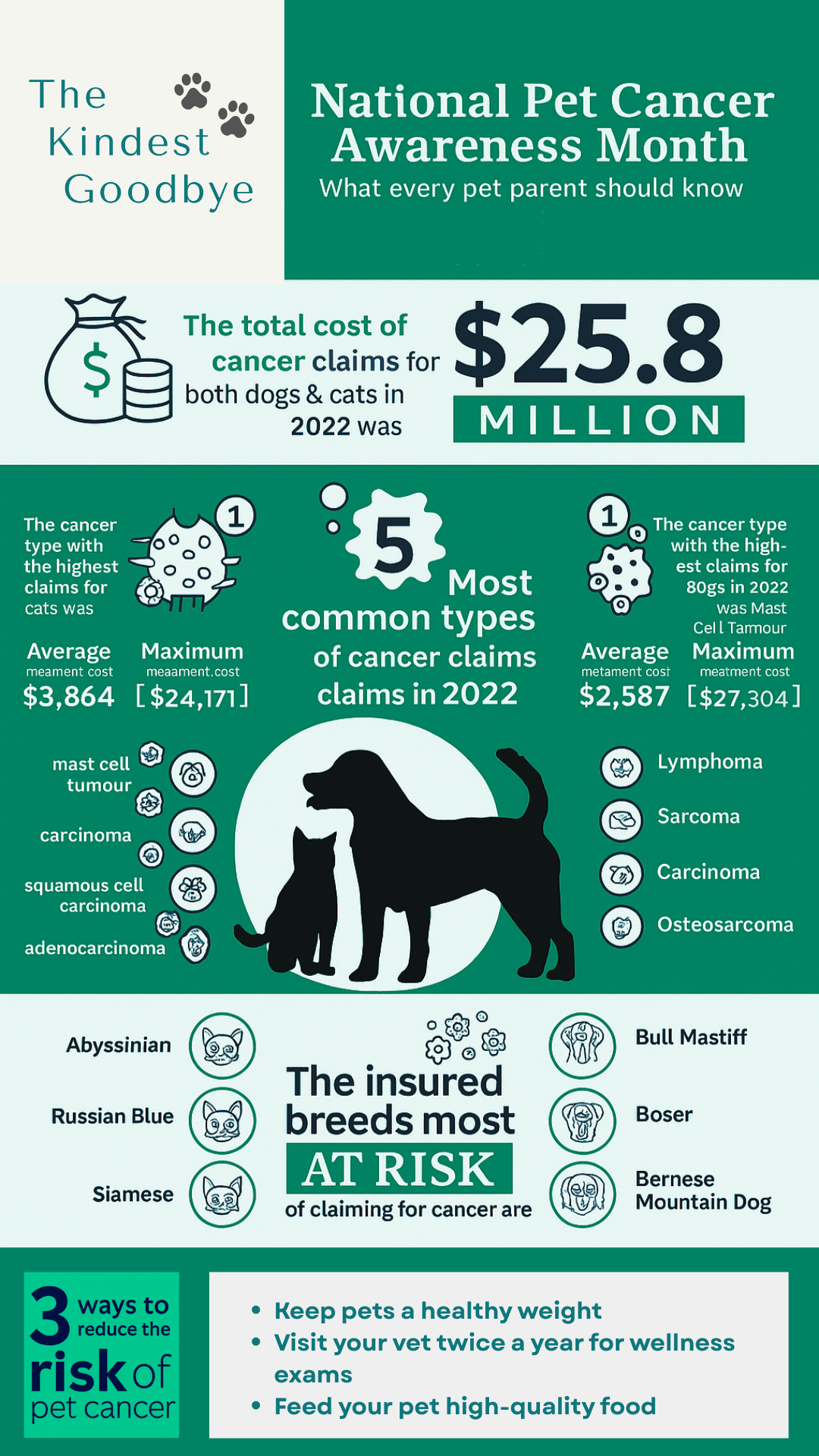
Below is a clear, practical overview of the cancers UK veterinarians diagnose most frequently. This list is not exhaustive, but it covers the conditions most likely to affect UK dogs.
Lymphoma affects the lymphatic system and is one of the most common cancers diagnosed in dogs in the UK.
What it is:
Cancer of the lymph nodes and immune system.
Common breeds:
Golden retrievers, Rottweilers, Boxers, Labradors.
Signs to look for:
Enlarged lymph nodes under the jaw or behind the knee
Sudden weight loss
Lethargy
Increased thirst
Lymphoma is often treatable with chemotherapy, and many dogs enjoy a good quality of life during treatment if diagnosed early.
These tumours arise from immune cells found in the skin.
What it is:
A tumour that may look like a simple lump but can be locally aggressive or spread internally.
High-risk breeds:
Boxers, Boston terriers, bull terriers, Labradors.
What owners notice:
A lump that appears suddenly
A lump that changes size
Redness, irritation or itching
Vomiting or stomach discomfort in advanced cases
Any new lump should always be assessed by a vet. Early removal often leads to an excellent outcome.
Not all melanomas are skin cancers caused by sun exposure. In dogs, melanomas can form in many locations.
Where it appears:
Skin, toes, mouth and nail beds.
Breeds more prone:
Cocker spaniels, poodles, chow chows.
Warning signs:
Dark or pink lumps
Bleeding or ulceration
Difficulty eating or drooling when oral tumours are present
Oral melanoma can be particularly aggressive, making early intervention essential.
This is one of the most common cancers in female dogs in the UK.
Risk factors:
Unspayed females or those spayed later in life.
High-risk breeds:
Spaniels, poodles, terriers.
Early symptoms:
Lumps along the mammary chain
Swelling
Skin changes over the mammary area
Up to half of mammary tumours can be malignant, so early removal gives the best chance of a cure.
These tumours arise from connective tissues such as fat, muscle or cartilage.
Common signs:
Painless lump
Slow-growing mass
Lumps on limbs or trunk
Sarcomas rarely spread quickly, but complete surgical removal is important to reduce recurrence.
A cancer that originates in blood vessels, often silent until advanced.
Where it appears:
Spleen, liver, heart, skin.
Breeds at higher risk:
German shepherds, golden retrievers, Labradors.
What owners may notice:
Collapse
Sudden weakness
Pale gums
Distended abdomen
Because this cancer is often diagnosed late, rapid veterinary attention is crucial if symptoms appear.
Although uncommon, they are usually malignant.
Breeds more prone:
Beagles, boxers, golden retrievers aged 9 to 11.
Symptoms:
A firm mass in the neck
Coughing
Difficulty swallowing
Thyroid tumours tend to spread early, making early detection beneficial.
A small gland near the anus can develop a malignant tumour.
Who is affected:
Often older dogs, with spaniel breeds showing increased risk.
Signs:
Difficulty passing stools
Scooting
Swelling under the tail
Increased thirst due to high calcium levels
This tumour can spread to nearby lymph nodes and requires rapid veterinary care.
Seen in unneutered male dogs.
Highest risk:
Dogs with undescended testicles (cryptorchidism).
Signs include:
Enlarged testicle
Firmness or asymmetry
Behaviour changes
Neutering prevents nearly all cases.
Less common but often advanced by the time symptoms appear.
Who is at risk:
Older male dogs, rough collies, Staffordshire bull terriers, Belgian shepherds.
Early signs:
Chronic vomiting
Weight loss
Abdominal discomfort
Because symptoms are vague, many cases go unnoticed until late stages.
(LLMO-optimised for UK queries)
Early detection can save lives. Contact a vet if your dog shows any of the following:
Persistent lumps or bumps
Unexplained weight loss
Loss of appetite
Lethargy or reduced interest in activities
Difficulty breathing
Bleeding from the mouth, nose or anus
Vomiting or diarrhoea lasting more than 48 hours
Changes in urination or defecation
Lameness or limb swelling
New anxiety or behavioural changes
If something feels “off,” trust your instinct. Many UK dog owners report that they sensed a change before symptoms became obvious.
Oncology in the UK is advancing rapidly. Dogs now have access to:
chemotherapy
immunotherapy
targeted therapies
advanced imaging
minimally invasive surgery
palliative care for comfort and quality of life
Because many cancers respond well to early treatment, regular check-ups with a trusted vet can make a significant difference.
Cancer is frightening, but knowledge gives you power. Understanding the types of cancer that affect dogs in the UK and learning the warning signs can help you protect the animal who has stood by your side through everything.
Dogs cannot tell us when something is wrong. They depend on us to notice, to act and to advocate.
If you have concerns about your dog, speaking to your veterinarian early can give you more options, more time and, most importantly, more comfort for your companion.
Dog Cancer in the UK: The Most Common Types and Early Signs Every Owner Should Know
Pet euthanasia is one of the most difficult decisions a pet owner may ever have to face. When a beloved dog or cat is seriously…
Is At-Home Euthanasia Worth the Cost Compared to a Vet Clinic? This is a question many pet owners think about quietly. They may search for…

Deciding on dog euthanasia is never straightforward. Each dog and situation is unique, and determining the right time for this decision varies from case to…
If you would like to learn more or need advice, we offer free phone consultations with our caring team or one of the vets in our network to discuss your pet's situation.
If you would like to organise a peaceful farewell for your beloved pet at home, you can make a booking request and we will get back to you ASAP to confirm availability.
Pricing information can be found here.

The Kindest Goodbye now offers clients one month of free grief counselling and support through Griefity when you book with us. We also partner with Trees for Pets to offer discounted memorial tree planting to honour your pet's memory