Preparing Your Senior Pet for the Cold: Gentle End-of-Life Care Tips for Autumn
Preparing Your Senior Pet for the Cold is a serious matter. Here are some gentle End-of-Life care tips for Autumn. As autumn settles across the…
It usually starts the same way.
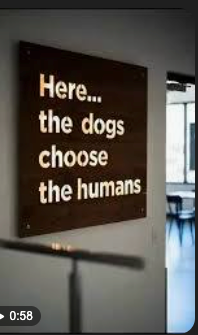
A dog approaches a stranger.
Sometimes slowly. Sometimes decisively.
The dog sits beside them, follows them, or refuses to leave.
The caption does the rest.
“I think this dog adopted me.”
“I didn’t choose him. He chose me.”
“Was I just adopted?”
Millions of views follow.
On TikTok, Instagram, and YouTube Shorts, these videos routinely outperform polished pet content, professional animal accounts, and even celebrity clips. They generate extraordinary watch time, unusually high save rates, and comment sections filled with emotional confessions rather than jokes.
“I needed this today.”
“This made me cry.”
“Why does this feel so important?”
To dismiss the trend as simple cuteness is to miss what it reveals about psychology, technology, and a generation living inside algorithmic systems while longing for something profoundly unengineered.
There is something structurally different about these videos.
They are quiet.
They are unscripted.
They end without resolution.
No punchline.
No reveal.
No clear outcome.
The dog does not perform a trick.
The human does not speak.
Nothing is explained.
From a media perspective, this is unusual. Platforms reward clarity, payoff, and repetition. Yet these videos thrive precisely because they resist all three.
They create what psychologists call an open emotional loop. The viewer fills in the meaning themselves.
That is where attachment begins.
The emotional engine of this trend is not the dog. It is the idea of being chosen.
Psychological research has long shown that perceived selection carries more emotional weight than mutual agreement. Being chosen activates feelings of worth, belonging, and safety more strongly than choosing someone else.
In everyday life, most people do not feel chosen. They feel assessed. Ranked. Filtered.
Dating apps match.
Jobs shortlist.
Algorithms recommend.
Choice has become procedural.
So when a dog appears to choose a human without criteria, language, or performance, it bypasses rational thinking and lands directly in the nervous system.
This is not sentimentality. It is attachment biology.
Gen Z did not invent loneliness, but they experience it differently.
They grew up with constant connection and limited intimacy.
With visibility without closeness.
With performance replacing presence.
They are fluent in irony, media literacy, and algorithmic awareness. They know content is curated. They know stories are framed. They know most viral moments are manufactured.
That is precisely why these videos work.
They feel unproduced.
The dog does not optimise.
The dog does not brand itself.
The dog does not ask to be seen.
For a generation exhausted by self-presentation, that absence of intent feels radical.
If a human approached another human this way, the response would be suspicion.
Dogs occupy a unique psychological position. They are widely perceived as emotionally transparent. Their motivations feel simple. Their behaviour feels honest.
This perception matters.
Neuroscience research shows that interactions with dogs can increase oxytocin levels in humans, lowering stress and promoting feelings of trust. Even watching dogs interact calmly can have a regulating effect.
In these videos, the dog becomes a stand-in for something increasingly rare. Unconditional attention without expectation.
No context required.
No explanation demanded.
But It Is Making It Inevitable
Artificial intelligence is not choosing these videos because they are about dogs. It is choosing them because they regulate attention.
Short-form platforms now optimise for retention over novelty. Content that slows people down performs better than content that excites them briefly.
These videos are watched to the end.
Often replayed.
Often saved.
The algorithm reads this as value.
AI systems do not understand adoption narratives. They understand nervous systems. And these videos soothe them.
This is not manipulation. It is feedback.
Human behaviour is training the algorithm, not the other way around.
If algorithms are mirrors, this trend tells us something uncomfortable.
People are seeking calm.
They are seeking sincerity.
They are seeking connection that does not demand explanation or performance.
In a digital ecosystem saturated with outrage, irony, and acceleration, this content represents deceleration.
The dog does not rush.
The moment is not edited aggressively.
There is no call to action.
The viewer breathes.
That alone is enough to make it viral.
It Is the Point
Critics often argue that these videos rely on projection. That humans are assigning meaning to animal behaviour that does not exist.
This is true. And it is irrelevant.
Projection is how humans process emotion. We do it with art, music, literature, and film. Animals simply provide a canvas that feels uncontaminated by human intention.
When viewers say “the dog knew,” they are not making a factual claim. They are expressing a desire for intuition, for connection that bypasses rationality.
In uncertain times, symbolic meaning becomes stabilising.
One of the most important aspects of this trend is what it normalises.
It does not pathologise loneliness.
It does not dramatise pain.
It does not offer solutions.
It simply acknowledges a shared emotional state.
Many of the comments under these videos are not about dogs at all. They are about people feeling unseen, tired, or quietly overwhelmed.
The video becomes a socially acceptable container for vulnerability.
That is rare online.
There is a responsibility that comes with virality.
Framing spontaneous interactions as adoption can obscure the realities of care. Dogs require stability, resources, and long-term commitment. Not every connection should become ownership.
The most responsible versions of this content make room for that truth. They allow the moment to remain meaningful without suggesting impulsive decisions.
Connection is not ownership.
Affection is not care.
This distinction matters.
At its best, this trend re-centres animals as relational beings rather than content.
It reminds viewers that dogs respond to calm presence, not performance. That trust forms through consistency, not spectacle.
In a culture obsessed with productivity and visibility, this is a quiet counter-narrative.
Care is slow.
Care is repetitive.
Care is unremarkable until it is absent.
This is not just a pet trend.
It is a signal about what people want from technology, media, and each other.
Less noise.
Less optimisation.
More presence.
The irony is that AI is amplifying this desire by rewarding the very content that resists artificiality.
That tension will define the next era of digital culture.
We do not watch these videos because we believe dogs are adopting humans.
We watch them because we want to believe that connection can still happen without negotiation.
That something real can still interrupt the feed.
That choice can exist without criteria.
For a few seconds, the algorithm fades and something older takes its place.
Attention.
Trust.
Presence.
And that feels worth sharing.
Preparing Your Senior Pet for the Cold is a serious matter. Here are some gentle End-of-Life care tips for Autumn. As autumn settles across the…
Tick Bites and Lyme Disease in Pets Tick bites and Lyme disease are important concerns for pet owners, especially during warmer months when ticks are…
In the UK, loneliness is no longer a marginal issue. It is a public health concern. Government data, NHS reports, and academic research all point…
If you would like to learn more or need advice, we offer free phone consultations with our caring team or one of the vets in our network to discuss your pet's situation.
If you would like to organise a peaceful farewell for your beloved pet at home, you can make a booking request and we will get back to you ASAP to confirm availability.
Pricing information can be found here.

The Kindest Goodbye now offers clients one month of free grief counselling and support through Griefity when you book with us. We also partner with Trees for Pets to offer discounted memorial tree planting to honour your pet's memory