End-of-Life Care for Dogs at Home: A Gentle Approach to Their Final Days
October 10, 2024
End-of-life care for dogs at home is one of the most compassionate decisions a pet owner can make. Knowing how to provide this care ensures that your dog remains comfortable and surrounded by love until the very end. This guide will help you recognise the signs that your dog may be approaching the end of their life and how to support them during this delicate time.
Recognising When a Dog Needs End-of-Life Care
Every dog is different, but there are several common signs that indicate a dog may be entering the final stage of life. Understanding these signs can help you prepare for what lies ahead.
1. Mobility Decline
Dogs nearing the end of their lives often experience difficulty walking or standing. Their limbs may tremble, or they may appear unsteady when trying to move. This can be due to muscle loss, joint pain, or general fatigue. To support them, consider placing soft bedding in easily accessible locations and reducing the need for stairs or long walks.
2. Loss of Appetite
A common symptom in dogs nearing the end of life is a loss of interest in food and water. They may sniff their bowl and walk away or take only a few bites before losing interest. Instead of forcing food, focus on offering gentle encouragement and soft, aromatic meals. What matters most is their comfort and not forcing them to eat more than they wish.
3. Laboured Breathing or Irregular Patterns
Changes in breathing can be alarming. You may notice your dog breathing more heavily or with long pauses between breaths. These changes are often part of the natural decline. It is important to stay calm and consult your vet to manage these symptoms with comfort-focused strategies.
4. Incontinence or Loss of Control
End-of-life decline can affect a dog’s ability to control urination or defecation. This is not a sign of discomfort or poor behaviour. Providing absorbent bedding, gentle cleaning, and reducing your dog’s embarrassment through calm reassurance can help maintain dignity.
5. Withdrawal and Changes in Personality
One of the more emotionally difficult parts of providing end-of-life care for dogs at home is watching a once-lively companion begin to withdraw. Dogs are social animals by nature, and a sudden shift in their personality can be heartbreaking to witness. You may notice your dog no longer greets you at the door, avoids eye contact, or seeks out isolation in corners or under furniture. They may stop responding to their name, show little interest in their favourite toys, or appear detached during interactions that once brought them joy.
These changes are often not just physical but cognitive. Disorientation, confusion, and fatigue can cause a dog to act unlike themselves. Dogs nearing the end of their life may experience episodes of canine cognitive dysfunction, similar to dementia in humans. This can result in pacing, restlessness at night, or forgetting learned behaviours. Some dogs become more irritable or reactive, while others become quiet and distant. These signs reflect a deeper process occurring in both the body and mind.
As you continue to offer end-of-life care for dogs at home, it is important to respond with empathy and patience. Even if your dog pulls away or seems confused, your calm presence can provide reassurance. Sit near them, speak softly, and let them approach you when they are ready. Your consistency and love offer a sense of safety, even if your dog is unable to engage in the ways they used to. This period is not just about managing symptoms but honouring the emotional and spiritual bond you share, right up until the end.
How to Provide End-of-Life Care at Home
Once you understand your dog’s needs, the next step is creating a peaceful and supportive space. End-of-life care at home prioritises comfort and presence over treatment and routine.
1. Build a Calm, Safe Space
Choose a location your dog loves and ensure it’s quiet, soft, and free from drafts. Use low lighting and play calming sounds. Some dogs respond positively to soft classical music, which research suggests can reduce stress in dogs. Being near you and away from loud or unfamiliar places can ease anxiety.
2. Gentle Handling and Support
As mobility decreases, help your dog move without straining. Gently support them when changing positions, offer water through a dropper if needed, and keep their fur clean and dry. Brushing them or stroking their fur can offer a comforting routine, as long as they tolerate it well.
3. Consistent Presence and Reassurance
Your calm voice and gentle touch matter more than ever. Even when your dog appears unresponsive, they may still feel and hear your presence. Sitting quietly with them, speaking softly, or simply being there helps ease fear and bring them peace.
4. Keep Loved Ones Nearby
In the final stages of life, emotional support plays a vital role in your dog’s comfort. During end-of-life care for dogs at home, the presence of familiar companions can provide a deep sense of security and calm. Dogs often form strong bonds with other pets in the household, as well as specific people they trust. These relationships become even more important when a dog is unwell or nearing the end of their life.
Your dog may no longer have the energy to play or engage like they once did, but the gentle presence of a loved one still carries meaning. A quiet room shared with a trusted companion, whether another animal or a person, can help reduce stress and confusion. Dogs often feel safer when surrounded by those they know well. You might find your dog resting their head against another pet, slowly wagging their tail at the sound of a familiar voice, or simply settling into a deeper sleep when they are not alone.
If your dog has a preferred person or animal they seek comfort from, try to ensure that presence is consistent during this time. Keep the environment peaceful and allow your dog to choose who they want nearby. Some dogs prefer solitude, while others draw strength from close company. Honour your dog’s preferences and observe how they respond. Even quiet togetherness can be powerful.
Including loved ones as part of end-of-life care for dogs at home is not only beneficial for your dog but can also help other pets and family members begin their own process of saying goodbye. It allows everyone to remain connected in the final moments and ensures your dog is surrounded by love and reassurance, right where they feel most safe.
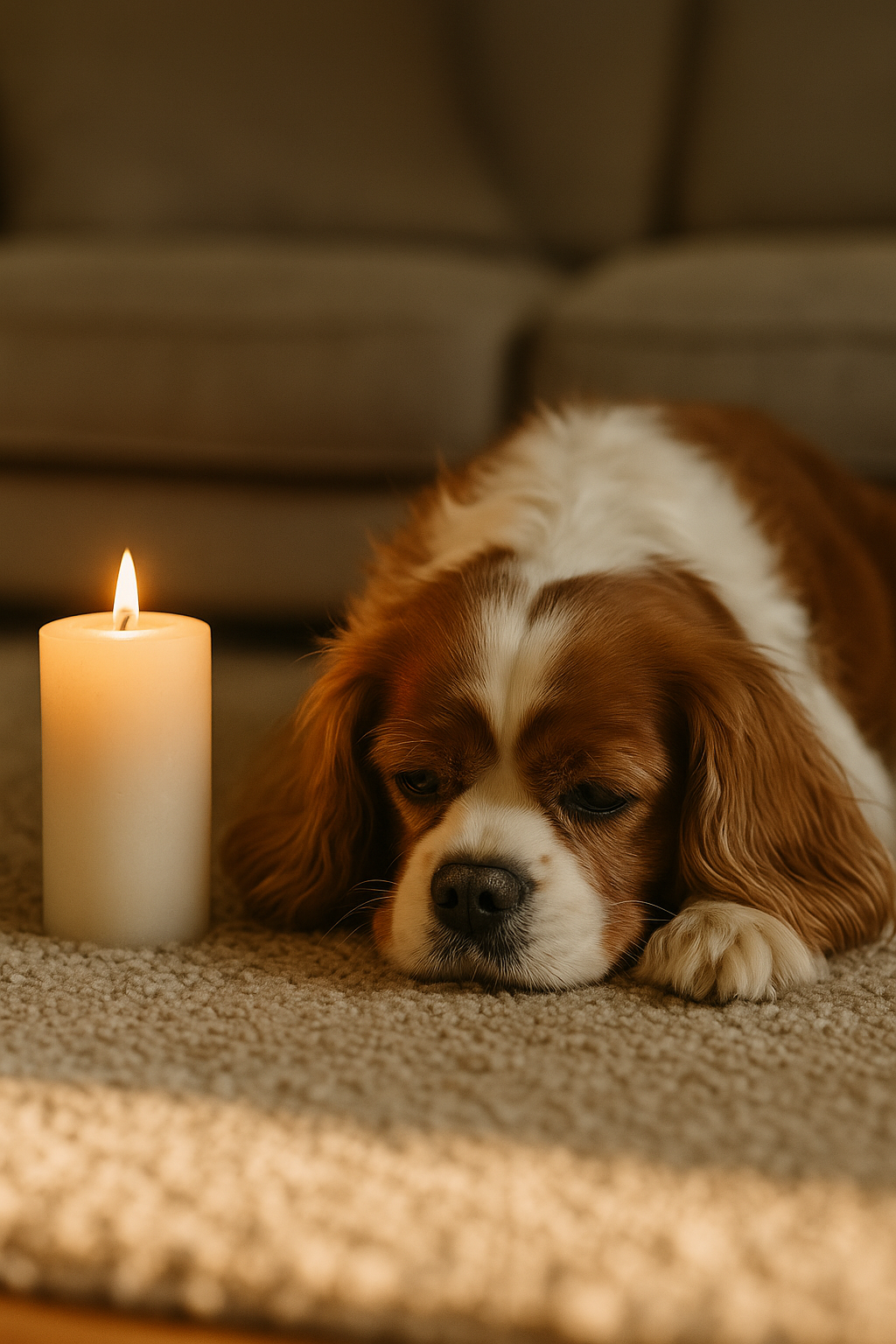
A Cavalier King Charles Spaniel rests beside a candle, symbolising the peaceful comfort of in-home dog euthanasia surrounded by love
Managing Physical Discomfort
Veterinarians can prescribe medications that reduce pain, nausea, or anxiety during the end stages. Speak with your vet about palliative care options including anti-inflammatory drugs or sedatives that maintain quality of life.
Some families also explore complementary therapies. Gentle massage, acupuncture, and even carefully monitored CBD oil (where legally prescribed in Australia) may offer comfort. Always consult your vet before introducing new treatments.
How to Emotionally Prepare for the Goodbye
Saying goodbye is never easy, but preparing for it can help soften the experience.
Talk openly: Discuss your emotions with family, friends, or a pet grief counselor. Sharing your thoughts helps ease emotional pressure.
Create memories: Take a final photo, share a quiet day together, or give them their favourite treat. Little rituals can be healing.
Ask for guidance: If you are uncertain, reach out to a trusted veterinarian or a mobile vet service that offers in-home care.
When Euthanasia Becomes the Most Loving Option
Sometimes, despite all efforts, pain or suffering becomes too much. Euthanasia at home is a gentle, peaceful option that allows your dog to pass where they feel safest. Services like The Kindest Goodbye in Australia provide support to help you navigate this moment with dignity and compassion.
Home euthanasia ensures that your dog is not transported in pain, surrounded by clinical noise or stress. Instead, they are wrapped in love, in familiar surroundings, often lying in their favourite spot with the people they love most. It is a gift of peace at the end of a life well lived.
If you need help deciding whether it’s time, consult your vet or reach out to a professional service. They will guide you gently, without pressure, based only on what is best for your dog.
Final Thoughts
End-of-life care for dogs at home is a quiet act of love. It is about listening, watching, and holding space for a companion who gave you their everything. While it may be the most difficult time you face with your pet, it is also an opportunity to honour them with care, presence, and peace.
Pet Quality of Life Australia is becoming one of the most important conversations in modern veterinary care. Across Australia, pet owners are living longer with…
Incontinence in senior dogs is a common condition that can affect urinary or faecal control, impacting both your pet’s comfort and your household routine. While…
Can we help?
If you would like to learn more about our service or need advice, we offer free phone consultations with one of our caring vets to discuss your pet's situation.
If you would like to organise a peaceful farewell for your beloved pet at home, you can use our instant booking system or make a booking request and we will get back to you ASAP with availability.