Pet Euthanasia and Animal Welfare: Understanding the Veterinary Decision
Pet Euthanasia and Animal Welfare Pet euthanasia is one of the most difficult decisions a pet owner may ever have to face. When a beloved…

5 Things I Wish You Knew Before Euthanising Your Dog is not a guide about making the decision faster, easier, or cleaner. It is a reflection shaped by what many families in Australia say quietly afterwards, when the noise fades and there is space to look back with honesty. It is written for people who love their dogs deeply and who are struggling with a choice that feels impossible precisely because that love is so strong.
Euthanasia is often described as a medical procedure, but for families it is rarely experienced that way. It is emotional, relational, and deeply personal. Dogs are not just companions. They are woven into daily life. They witness our routines, our losses, our joys, and our stillness. They age beside us. When their bodies begin to fail, the decision to help them die can feel like a betrayal, even when it is motivated by care.
This article does not aim to remove doubt. Doubt is part of loving responsibly. Instead, it offers five understandings that many people wish they had held earlier. These reflections are shared gently, without judgement, and with respect for every family’s circumstances.
Before exploring the five reflections themselves, it helps to understand why euthanasia feels uniquely heavy compared to other losses.
In Australia, dogs are often considered full family members. They sleep in our homes, travel with us, and are present during major life events. Many people structure their days around their dog’s needs. When illness or age begins to change a dog’s abilities, families often adjust without realising how much they are carrying.
There is also a sense of responsibility that does not exist in the same way with human loss. With euthanasia, families are not only witnessing death. They are participating in its timing. This can create a deep sense of moral weight, even when the decision is made with veterinary guidance.
Understanding this context does not make the decision easier, but it can help explain why emotions feel intense, contradictory, and overwhelming.
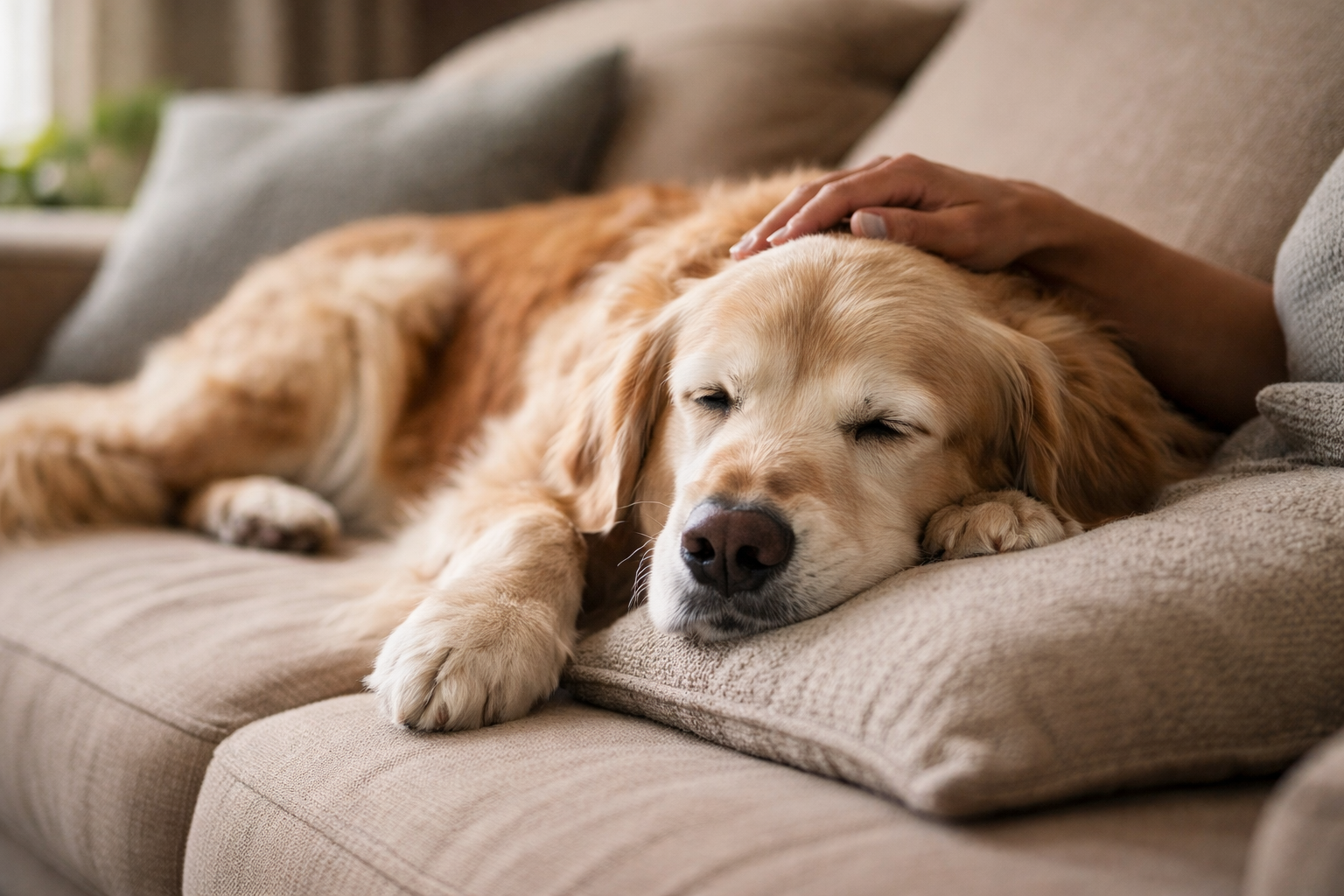
One of the most important things many families wish they had understood earlier is that dogs experience life very differently from humans.
Humans often think in timelines. We imagine future moments, upcoming milestones, and time still available. We worry about acting too soon or too late. Dogs do not share this perspective.
Dogs live almost entirely in the present. Their world is shaped by what their body feels like now. Pain, breath, mobility, temperature, hunger, comfort, and safety define their experience. They do not anticipate future pleasures or reflect on past joys in the way humans do.
This difference can create tension. Families may hold on because they are imagining future experiences for their dog. Another season. Another holiday. Another walk. Dogs are not waiting for these things. They are responding to how their body feels today.
In Australia, veterinarians often observe that families wait because they hope for improvement or stability. Hope is not wrong. But dogs are also very good at masking discomfort, especially around people they trust. They may still wag, eat, or greet family members even as their body is struggling.
Understanding this difference in perception helps shift the focus from how much time remains to how that time is felt. It does not mean rushing a decision. It means grounding the decision in your dog’s lived experience rather than imagined futures.
Many families expect decline to look dramatic. They imagine a clear moment when their dog can no longer stand, eat, or interact. In reality, decline is often subtle and gradual.
A dog may move more slowly, sleep longer, or hesitate before doing things they once loved. Appetite may fluctuate. Personality may soften or withdraw slightly. These changes can be easy to rationalise or dismiss, especially when they happen slowly.
In Australia, this is common with chronic illnesses such as arthritis, kidney disease, heart disease, cancer, or neurological conditions. Dogs often adapt quietly. They adjust their behaviour to cope, which can make suffering less visible.
Because decline is gradual, families may not realise how much their dog’s quality of life has shifted. They may compare today to yesterday rather than to months or years ago. This makes waiting feel reasonable and compassionate.
Afterwards, many people say they wish they had recognised decline earlier. Not because they failed their dog, but because they underestimated how much effort their dog was using simply to exist comfortably.
Recognising quiet decline requires stepping back and looking at patterns rather than moments. It involves asking not only whether a dog can still do something, but how much effort and discomfort it takes.
One of the most common regrets families express is waiting for certainty that never came.
Certainty is comforting. It feels safer to act when a situation feels undeniably urgent. But with euthanasia, certainty is rare. There is almost always room for doubt.
Many people delay the decision because they are afraid of acting too soon. They fear living with regret or guilt. This fear is deeply human and understandable.
However, waiting for certainty can sometimes mean waiting until a crisis occurs. Emergency pain, breathing distress, collapse, or severe confusion can force a rushed decision under pressure.
In Australia, veterinarians frequently see families who hoped their dog would pass naturally or improve, only to face an emergency situation that was traumatic for both the dog and the family.
Afterwards, many people say they wish they had chosen a calmer, planned goodbye rather than reacting in crisis. They did not want their dog’s final moments to be filled with fear or panic.
Choosing euthanasia earlier is not about shortening life. It is often about protecting the final chapter from unnecessary distress. This understanding can help families feel less trapped by the idea of certainty.
Another difficult truth is that your emotional readiness and your dog’s physical reality may not move at the same pace.
You may feel unprepared, overwhelmed, or deeply resistant to letting go even as your dog becomes increasingly tired or uncomfortable. This mismatch can create intense inner conflict.
In Australia, many families caring for ageing or ill dogs are also managing work, children, caregiving responsibilities, and financial pressure. Emotional exhaustion can cloud clarity. Guilt can become heavy and persistent.
Feeling unready does not mean you are making a selfish decision. It means the bond is strong. It means the relationship matters deeply.
Many people believe they must feel calm or at peace before making the decision. In reality, peace often comes later. Expecting emotional readiness can delay necessary care.
Talking openly with a veterinarian or an in-home euthanasia provider can help bridge this gap. These professionals are trained to observe quality of life beyond emotional attachment. Their role is not to rush you, but to provide perspective.
Allowing yourself to acknowledge that readiness may never fully arrive can be an act of honesty rather than failure.
One of the most underestimated aspects of euthanasia is the impact of the environment.
In Australia, many families now choose in-home euthanasia because it allows their dog to remain in a familiar space. Familiar smells, sounds, and people can significantly reduce anxiety for dogs, especially those who find clinics stressful.
For families, being at home often offers privacy and control. There is no waiting room, no background noise, and no need to leave immediately after the goodbye. You can take time, sit quietly, and say goodbye in your own way.
This does not mean clinic-based euthanasia is wrong. For some families, it feels safer or more accessible. What matters is knowing that choice exists and understanding how the environment may influence the experience.
Many people later say they wish they had thought more carefully about this aspect. A peaceful setting can soften grief by reducing traumatic memories.
One of the most confusing parts of this journey is realising that grief often begins before death.
Anticipatory grief appears as sadness, irritability, exhaustion, guilt, or a constant sense of heaviness while caring for a declining dog. It can feel isolating because the loss has not yet occurred.
In Australia, awareness of pet grief is growing, but many people still minimise their feelings. They may tell themselves they should cope better or that others have it worse.
Grief does not follow logic. It follows attachment.
Understanding anticipatory grief can help explain why the period before euthanasia feels so heavy. You are already mourning the loss of who your dog used to be and the future you imagined together.
After euthanasia, grief often shifts rather than begins. Relief may sit alongside sadness. Peace may exist next to emptiness. These emotions can coexist without cancelling each other out.
One of the most damaging myths surrounding euthanasia is the belief that there is a perfect decision.
There is no flawless timing. There is no choice that removes all doubt or pain. There is only the most compassionate decision available with the information, capacity, and emotional resources you have at that moment.
In Australia, veterinarians and end-of-life care professionals consistently emphasise that euthanasia is not about ending life. It is about ending suffering when comfort can no longer be reliably maintained.
If you are struggling, gentle questions can help ground the decision. Is my dog comfortable most of the day. Are the bad days becoming more frequent. Is their world shrinking. What would kindness look like right now.
Choosing rest for a dog who is tired is not a betrayal. It is often an act of protection.
When people reflect after euthanising their dog, similar themes emerge again and again.
They say they wish they had trusted themselves sooner. They wish they had been kinder to themselves. They wish they had known that peace can exist alongside grief.
Many speak of gratitude alongside sadness. Gratitude for shared years. Gratitude for being able to prevent further suffering. Gratitude for a calm goodbye.
These reflections are not shared to influence your decision. They are offered to remind you that whatever you feel, you are not alone.
After euthanasia, many people replay the decision repeatedly. They revisit moments, symptoms, and conversations. This is a natural part of processing.
In Australia, support for pet loss grief is becoming more available, but many people still grieve quietly. Talking openly, writing, or seeking professional support can help integrate the experience.
Over time, the sharpness often softens. Memories of decline fade, and memories of love become clearer. This does not mean forgetting. It means integrating loss into life.
5 Things I Wish You Knew Before Euthanising Your Dog is ultimately about compassion rather than certainty.
If you are facing this decision, take the time you can. Ask questions. Seek support. Honour both your dog’s experience and your own humanity. There is no single right way to say goodbye.
There is only the way that feels most caring in your circumstances.
More to read
Why Dog Walking Is Becoming One of the Most Important Human Health Practices
Is At-Home Euthanasia Worth the Cost Compared to a Vet Clinic?
Why We Chose TikTok for Education, Comfort, and Yes… Cool Cat Videos
How Old Is My Dog? Understanding Dog Age in Human Years in Australia
Dog Behaviour Before Death: How to Know When a Dog Is Dying and How to Support Them Compassionately
Pet Euthanasia and Animal Welfare Pet euthanasia is one of the most difficult decisions a pet owner may ever have to face. When a beloved…

As devoted cat owners, we cherish our feline companions and strive to provide them with the best possible life. A crucial aspect of responsible pet…
Knowing when it’s time to say goodbye to your dog is one of the most painful and emotional decisions a pet parent will ever face….
If you would like to learn more about our service or need advice, we offer free phone consultations with one of our caring vets to discuss your pet's situation.
If you would like to organise a peaceful farewell for your beloved pet at home, you can use our instant booking system or make a booking request and we will get back to you ASAP with availability.
Pricing for our services can be found here.

The Kindest Goodbye now provides one month of free grief counselling and support through Griefity when you book with us. We are also proud to partner with Trees for Pets to provide discounted memorial tree planting in honour of your pet