Is At Home Euthanasia Worth the Cost Compared to a Vet Clinic?
Is At Home Euthanasia Worth the Cost Compared to a Vet Clinic? When families begin considering pet euthanasia, one of the most common questions is…

Cancer is one of the most significant health challenges facing Australian dogs today. As a veterinarian, I meet families every week who arrive frightened, confused and unsure of what certain symptoms mean. Many of them ask the same question through tears or panic.
How did this happen and could we have seen it earlier?
This article shares what every Australian pet owner should know about dog cancer, based on current research, national data and everyday clinical experience. My goal is simple. To help you recognise changes early, understand the cancers we see most often and feel more prepared to support your dog through whatever comes next.
Knowledge does not remove the fear entirely, but it does remove the uncertainty. That is what helps families make informed, compassionate decisions.
Cancer affects an estimated one in four dogs during their lifetime and more than 50 percent of dogs over ten will develop some form of cancer. These numbers are similar to those reported in the United States and the United Kingdom, and they continue to rise as dogs live longer lives with better nutrition and veterinary care.
Australian veterinarians most commonly diagnose:
Understanding these cancers and how they appear helps owners spot small signs before they become emergencies.
There are several reasons why cancer is diagnosed more frequently.
1. Longer life expectancy
Australian dogs live longer today due to improved diet, vaccination and preventative care. Age is the strongest risk factor for cancer in dogs.
2. Environmental exposures
Sun exposure, pesticides, smoke and pollutants increase cancer risk. Dogs living in Australia have significantly higher sun exposure than many other regions.
3. Breed predisposition
Many breeds in Australia, including Labrador retrievers, golden retrievers, boxers, flat coated retrievers, mastiffs and shepherds, have known genetic risks for certain cancers.
4. Delayed desexing
Later spaying increases the risk of mammary cancer in females. Entire males have a higher chance of testicular cancer.
5. Better diagnostics
Veterinary clinics now use ultrasound, cytology, biopsy and advanced imaging more frequently, increasing detection rates.
Cancer has become more common, but our ability to diagnose and treat has improved dramatically.
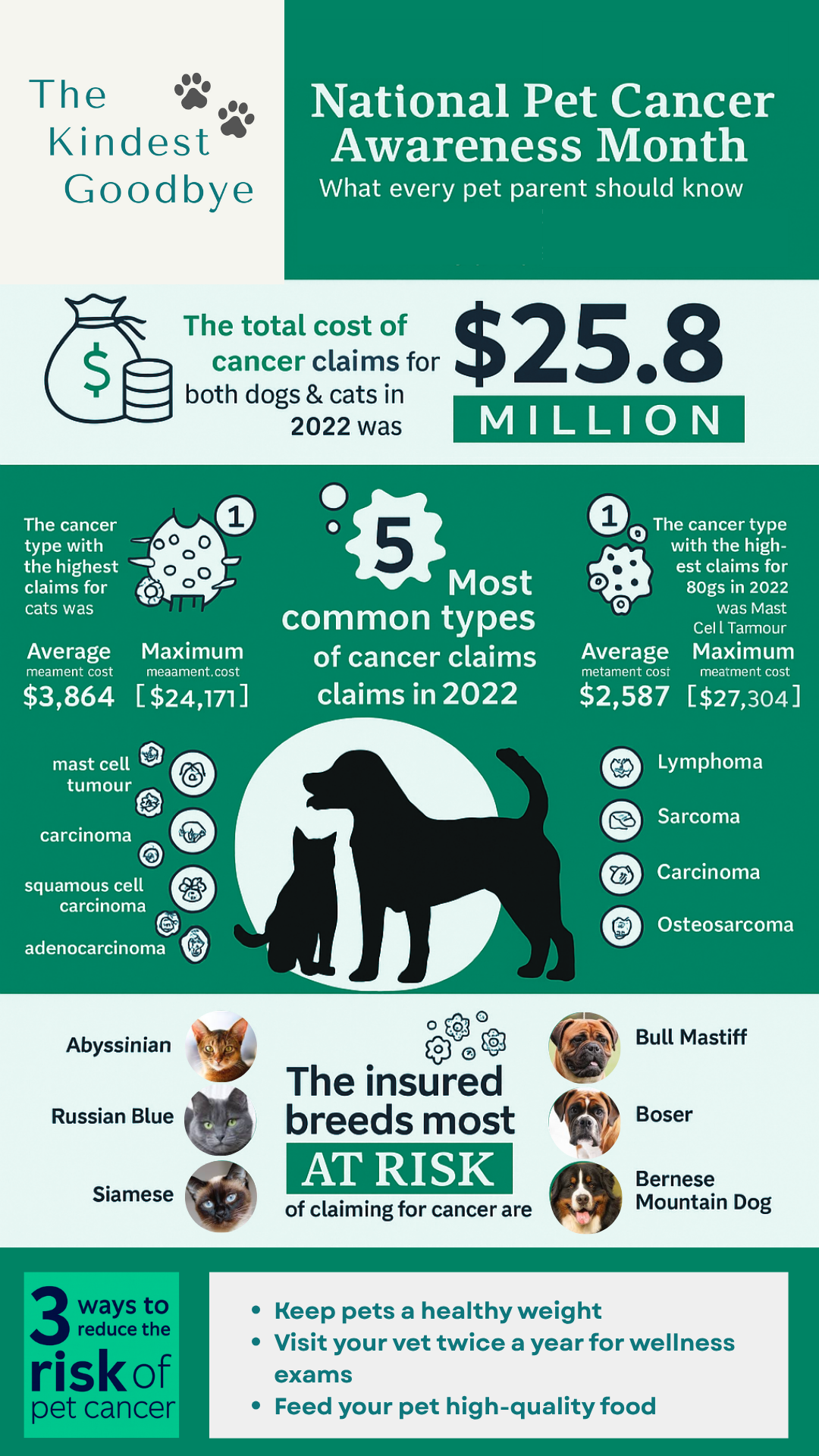
Here is an overview written for clarity, accuracy and practical understanding.
One of the most common cancers in dogs.
What it affects: The lymphatic system and immune cells.
Common early signs:
Lymphoma is often treatable, and many dogs respond well to chemotherapy.
Australia sees a high number of these cases.
Where they appear:
Warning signs:
Any lump on a dog should be checked by a veterinarian. Early removal is vital.
Often appears in the mouth, nail beds or feet.
Breeds at higher risk:
Chow chows, cocker spaniels, poodles and schnauzers.
Symptoms:
Oral melanoma can be aggressive and is diagnosed frequently in Australia.
Still common in unspayed or late spayed females.
High risk dogs:
Terriers, poodles, spaniels.
What owners notice:
Desexing before the first season reduces risk dramatically.
A slow growing tumour that can appear almost anywhere on the body.
Typical signs:
Sarcomas often require early wide surgical removal to reduce recurrence.
One of the most serious cancers we see in Australia.
Where it develops:
Common emergency symptoms:
This cancer is often silent until late stages, which is why rapid veterinary care is essential if these symptoms appear.
A bone cancer seen more often in large breeds.
Breeds often affected:
Great Danes, Rottweilers, Irish wolfhounds, mastiffs, golden retrievers.
Early signs:
Osteosarcoma is aggressive but treatable when detected early.
The following symptoms warrant veterinary attention within 48 hours.
Australian pet parents often say they had a “gut feeling” something was wrong before symptoms became obvious. Trust that instinct.
Modern oncology in Australia has advanced significantly. Many veterinary hospitals now offer:
Treatment is not always curative, but it can often extend life and improve comfort. Many families choose palliative care when cure is not possible, focusing on dignity, mobility, appetite and pain relief.
Dogs experiencing cancer benefit from:
Owners should also take care of themselves. Cancer care is emotionally heavy, and veterinary teams can guide families through every stage.
Cancer will always be frightening for families, but information changes everything. When owners understand the cancers seen most often in Australian dogs and know how to recognise the subtle early signs, outcomes improve and suffering decreases.
Your dog depends on you to notice changes and act quickly. If something feels wrong, contact your veterinarian. Early intervention, whether curative or palliative, always leads to better quality of life and more peaceful decision making.
Love cannot prevent cancer, but it can guide every moment of the journey.
Is At Home Euthanasia Worth the Cost Compared to a Vet Clinic? When families begin considering pet euthanasia, one of the most common questions is…

It’s a question that burdens the hearts of many pet owners across the globe: do dogs feel pain when being put to sleep? It’s a…
How Do You Know When It’s Time to Say Goodbye to Your Beloved Pet? Saying goodbye to a cherished pet is never just a decision,…
If you would like to learn more about our service or need advice, we offer free phone consultations with one of our caring vets to discuss your pet's situation.
If you would like to organise a peaceful farewell for your beloved pet at home, you can use our instant booking system or make a booking request and we will get back to you ASAP with availability.
Pricing for our services can be found here.

The Kindest Goodbye now provides one month of free grief counselling and support through Griefity when you book with us. We are also proud to partner with Trees for Pets to provide discounted memorial tree planting in honour of your pet