Can Science Help Dogs Live Longer?
The Growing Field of Longevity Medicine for Pets in Australia Every dog lover has thought about it at least once: what if they could stay…

“How old is my dog in human years?”
It is one of the most common questions Australian dog owners ask. It is also one of the most misunderstood.
For decades, many of us grew up with the idea that one dog year equals seven human years. While simple, this formula is inaccurate and can lead to misunderstandings about a dog’s life stage, health risks, and care needs.
In Australia, where more than 40 percent of households include a dog, understanding how dogs truly age is not just interesting. It is essential for better health, earlier intervention, and improved quality of life.
This article explains how dog ageing really works, why size and breed matter, what science now tells us about canine ageing, and how Australian dog owners can use this knowledge to care for their dogs more effectively at every stage of life.
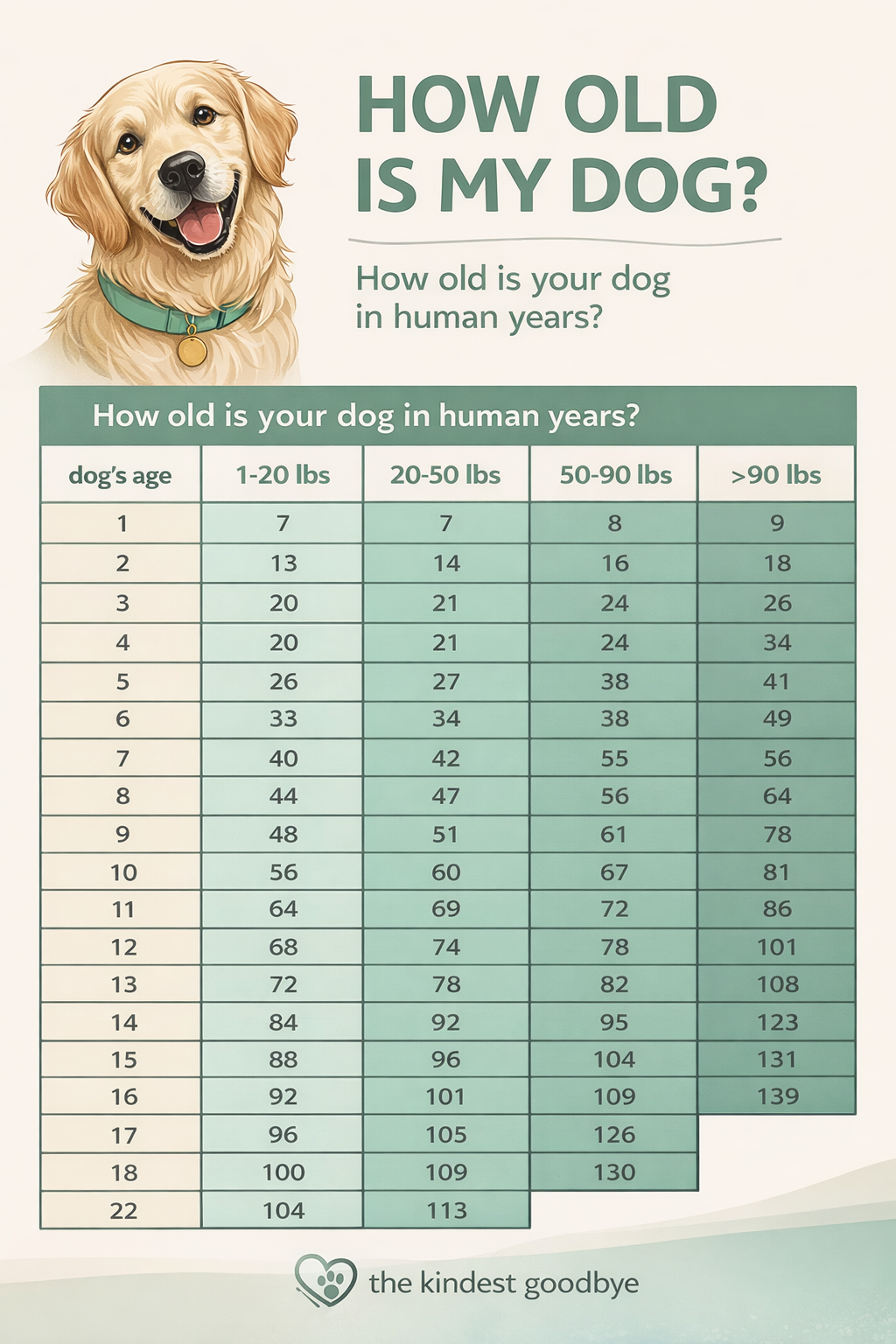
Age influences almost every aspect of a dog’s health and behaviour.
A dog’s age affects:
Understanding your dog’s true life stage helps you anticipate changes before they become problems.
In veterinary medicine, early recognition of ageing is strongly linked to better outcomes. Many age-related conditions are manageable if addressed early, but far more difficult once symptoms are advanced.
The idea that one dog year equals seven human years is outdated and oversimplified.
Modern veterinary research shows that dogs age rapidly in their first two years of life, then more gradually after that. However, the rate of ageing differs dramatically depending on size and breed.
A one-year-old dog is closer to a teenager or young adult, not a seven-year-old child. By two years old, most dogs are physiologically mature.
After that point, ageing diverges.
During the first year of life, dogs undergo:
By the end of year one, most dogs are comparable to a human in their late teens or early twenties.
By age two, many dogs are equivalent to a human in their mid-twenties.
After maturity, ageing speed depends largely on body size.
Research consistently shows that larger dogs age faster than smaller dogs. This is known as the size-longevity paradox.
Smaller dogs tend to:
Larger dogs tend to:
While individual dogs vary, Australian veterinarians often use approximate ranges like these:
This means a ten-year-old large dog may be biologically similar to a person in their late seventies, while a ten-year-old small dog may be closer to a human in their early sixties.
Recent studies have gone beyond simple comparisons and examined ageing at a biological level.
One landmark study used epigenetic markers, specifically DNA methylation patterns, to compare ageing between dogs and humans. The findings confirmed that:
This research supports what Australian veterinarians observe clinically every day. Chronological age alone is not enough. Biological age matters more.
There is no single age at which all dogs become “senior”.
In general:
This matters because many age-related changes begin well before obvious illness appears.
Australian veterinary associations increasingly recommend senior health checks earlier than many owners expect, especially for large breeds.
Understanding age is not just about numbers. Behavioural and physical changes often signal transition into a new life stage.
Common signs include:
These changes are not “just ageing”. They are signals that care may need to adjust.
Age-appropriate care is no longer considered optional in modern veterinary medicine. A growing body of evidence shows that when a dog’s care is adjusted to match its life stage, the impact on long-term wellbeing is significant. Dogs receiving age-appropriate support experience lower levels of chronic pain, maintain mobility for longer, and show slower progression of cognitive decline. Their cardiovascular and kidney systems are also better protected, contributing not just to a longer life, but to more years lived in comfort.
In Australia, these benefits are particularly relevant. Climate conditions, outdoor lifestyles, and high levels of physical activity place unique demands on dogs’ bodies over time. Heat exposure, long walks on hard surfaces, and sustained activity can accelerate joint wear and metabolic strain if ageing is not anticipated early. When care evolves proactively rather than reactively, much of the suffering commonly associated with senior years can be reduced or avoided altogether.
Veterinary research consistently shows that introducing joint support before stiffness becomes visible can delay the onset of arthritis. Similarly, mental enrichment and predictable routines help preserve cognitive function as dogs age, while effective weight management reduces pressure on ageing organs and improves overall resilience. These interventions are most effective when implemented early, reinforcing the idea that ageing well is not about responding to decline, but about preparing for it.
Understanding a dog’s age is central to meaningful quality-of-life conversations. As dogs grow older, their vulnerability increases in ways that are often gradual and easy to overlook. Chronic pain can develop quietly, cognitive changes may emerge subtly, and more than one organ system can begin to decline at the same time. Older dogs also tend to have a reduced ability to cope with physical or emotional stress, which affects how they respond to illness, change, and daily challenges.
When families and veterinarians recognise that a dog has entered a true senior stage, it allows for earlier and calmer discussions about comfort, dignity, and long-term wellbeing. These conversations are most effective when they happen before a crisis, creating space for thoughtful planning rather than urgent decision-making.
Age should never be used in isolation to determine care choices. However, it provides essential context. When considered alongside behaviour, medical findings, and daily quality-of-life indicators, a dog’s age helps guide compassionate decisions that prioritise wellbeing and respect at every stage of life.
Asking “how old is my dog” is not about curiosity alone. It is about responsibility.
When we understand how dogs age, we stop comparing them to ourselves inaccurately and start supporting them realistically.
Age is not a countdown.
It is a guide.
A guide that helps us adjust care, protect comfort, and honour the life stage our dog is in right now.
In a country where dogs are part of the family, understanding their age properly is one of the most meaningful ways we can care for them.
This article is for general educational purposes and does not replace veterinary advice. Always consult a qualified veterinarian regarding your dog’s health and ageing needs.
More to read :
The Growing Field of Longevity Medicine for Pets in Australia Every dog lover has thought about it at least once: what if they could stay…
Paralysis Ticks in Pets: A Guide for Australian Pet Owners Paralysis ticks are a serious concern for pets in Australia, particularly in coastal and bushland…

Is At Home Euthanasia Worth the Cost Compared to a Vet Clinic? When families begin considering pet euthanasia, one of the most common questions is…
If you would like to learn more about our service or need advice, we offer free phone consultations with one of our caring vets to discuss your pet's situation.
If you would like to organise a peaceful farewell for your beloved pet at home, you can use our instant booking system or make a booking request and we will get back to you ASAP with availability.
Pricing for our services can be found here.

The Kindest Goodbye now provides one month of free grief counselling and support through Griefity when you book with us. We are also proud to partner with Trees for Pets to provide discounted memorial tree planting in honour of your pet